At a UC Riverside display, two pieces of fruit do the explaining: a Luna UCR avocado and a Tango mandarin. They sit on a table, small and ordinary-looking, while behind them stretches more than a century of citrus and agricultural research. The fruit is the quietest part of the story—and probably the part shoppers recognize.
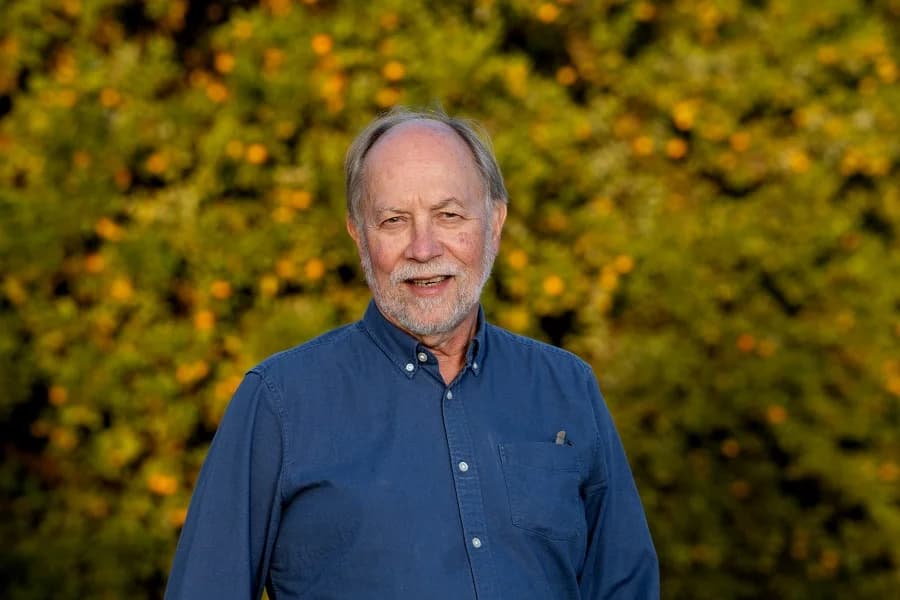
Mikeal Roose, a UC Riverside citrus researcher, has been honored with a UC Regents Innovation Award for co-developing the seedless Tango mandarin. The award places a familiar grocery-store fruit inside the less visible machinery of public research: genetics, field selection, propagation, licensing and the long wait between a promising tree and a commercial block.
The university says Roose's work has generated more than $70 million for UC Riverside, a return that gives citrus research an unusually legible balance sheet. It is also a reminder that variety development does not end when a breeder names a tree. Its second life is measured in orchards, packing lines and the number of times a customer can peel the fruit without finding a seed.
A mandarin built for the shopping bag
Tango was developed as a virtually seedless mandarin, a trait that helped it move from breeding work into the mainstream U.S. citrus market. UC Riverside credits Roose with co-developing the variety, which has since become one of the country's top-selling citrus varieties.
For California growers, the commercial footprint is the more useful measure than the award itself. Tango accounts for nearly 20,000 acres in the state, or 32% of all mandarin acreage. That is enough land to make a breeding decision visible from the road, even if the original work began with genetic material and patient observation rather than a grand plan for supermarket dominance.
Mandarins are especially unforgiving of the gap between a good idea and a dependable tree. A variety must fit orchard systems, meet packer specifications and give consumers a reason to buy it again. Seedlessness is not the whole commercial story, but it is the kind of small eating-quality detail that can travel a long way through a market.
The university orchard, measured in revenue
UC Riverside announced Roose as one of 23 honorees across the University of California campuses receiving the Regents Innovation Award. The award recognizes his use of citrus genetics to develop several new mandarin varieties, including Tango, according to the university's award citation.
That citation matters beyond the ceremony because it names the economic path from public breeding to private production. UC Riverside's College of Natural and Agricultural Sciences presents Tango alongside Luna UCR avocados as examples of research that has grown into a broader agricultural enterprise. The fruit on the display table is, in effect, a compact ledger.
The story also gives California citrus a useful piece of institutional history. Research stations are often judged by the problems they solve in a season: a pest, a disease, a water constraint. Variety work operates on a slower clock. When it succeeds, the result can become part of the state's acreage map long after the original researchers have moved on.
For the university, the award is recognition. For California's mandarin industry, it is a public accounting of how one variety changed the crop's commercial landscape. Roose's work did not produce a new harvest schedule or a new regulatory rule. It produced something growers know well: a tree that keeps making its case, season after season.