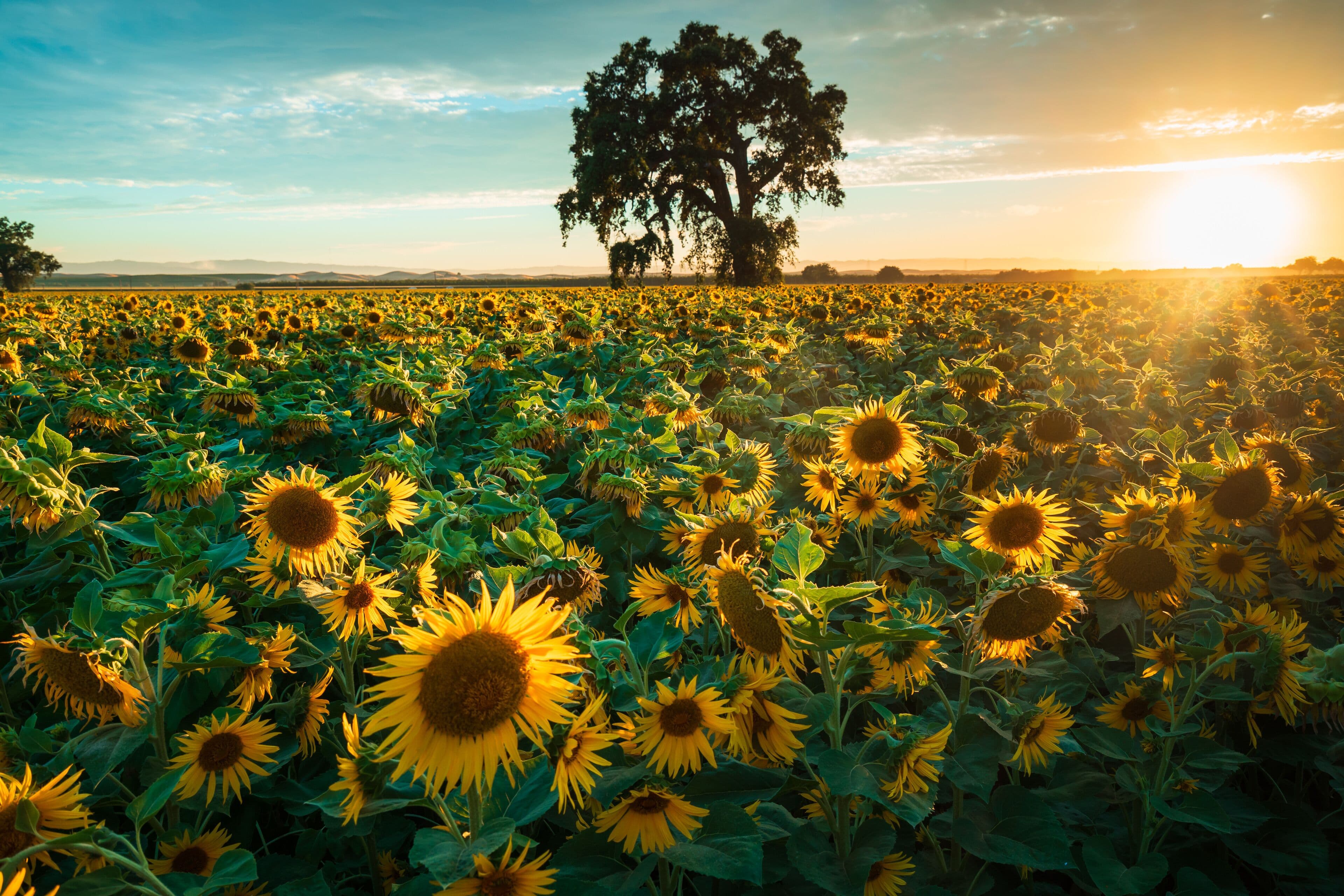
A sunflower seed is a small piece of evidence. In Fresno County, it points toward a larger story about people who arrived with crops in mind, along with the habits needed to coax production from a hot, demanding valley.
German-Russian immigrants began settling in Fresno in 1887, carrying agricultural knowledge shaped elsewhere and adapting it to California's conditions. Their arrival belongs to the less decorative history of the Central Valley: the part made from planting schedules, field discipline and the stubborn repetition of work.
From the Volga to Fresno's Fields
The newcomers brought advanced agricultural techniques and practical knowledge that became useful in a region still assembling its farming identity. Knowledge travels differently from machinery. It arrives in a grower's memory, gets tested against local soil and weather, and survives only if it earns its keep.
That process changed the menu of what could be grown and sold. Sunflower seeds and Klondike watermelon became part of the region's agricultural landscape, crops with a distinctly practical quality: recognizable, marketable and suited to the broad ambitions of Fresno farming.
The Work Behind the Landscape
The contribution was not limited to particular varieties. The immigrants' disciplined farming practices helped turn the Central Valley into one of the nation's most productive agricultural zones, according to the Central Valley Community Foundation's account of the community.
That transformation is easy to flatten into a success story, but fields do not become productive by reputation alone. They require reliable routines, careful timing and a willingness to adjust inherited methods to a new place. Fresno agriculture was built through that accumulation of small decisions, long before the valley became shorthand for scale.
The legacy also sits beside later chapters in Fresno County's crop history. The region's growers would go on to work across a wide range of specialty crops, but the older pattern remained: agricultural communities arriving with knowledge, testing it locally and leaving behind methods that outlast the original families.
A Heritage Still Visible in Crop Choices
For today's California grower, the useful lesson is less about recreating an 1887 farm than recognizing how quickly a region's agricultural character can change when people bring both plant material and a way of working. Fresno's crop history was made by that combination, not by climate acting alone.